Solutions for OC and OV Faults in Frequency Converters
What is the OC fault in a frequency converter?
Products related to my wastewater treatment system
The OC fault in a
frequency converter refers to an over-current fault.
OC stands
for Over Current, indicating that the output current of the frequency converter
has exceeded its preset over-current detection threshold1. In the frequency converter manual, OC is
usually clearly labeled as an over-current fault, along with other related
faults such as short-circuit fault (SC). The OC fault is one of the most
frequent alarm phenomena in frequency converters, with complex and diverse
causes, mainly including excessive load, overly short acceleration/deceleration
time settings, damage to the inverter module, damage to the drive circuit, etc.12. When an over-current fault occurs in the
frequency converter, it is necessary to identify and resolve it promptly and
accurately to ensure the continuity and efficiency of the production line and
avoid greater economic losses.
What are the solutions to the OC fault of the
frequency converter? The solutions to the OC fault of the frequency converter
mainly include checking the load condition, adjusting the acceleration and
deceleration time, checking the torque boost amount, limiting the current and
torque, considering increasing the power of the frequency converter, and
checking the internal components of the frequency converter, etc.
- Checking the Load
Condition:
- Confirm whether the load is within the carrying
capacity of the frequency converter. If the load is too heavy, it needs
to be reduced or a more powerful frequency converter should be replaced12.
- Check whether the motor is operating normally
and whether the motor cable is too long or improperly selected, causing
excessive output leakage current. If there are faults, repairs or
replacements are required4.
- Adjusting the
Acceleration and Deceleration Time:
- Confirm whether the acceleration and
deceleration time is set too short, and appropriately extend it to avoid
excessive current13.
- Checking the Torque
Boost Amount:
- Check whether the torque boost amount is too
large. If it is, reduce the corresponding value of the function code and
observe whether the current decreases without loss of speed3.
- Limiting the Current
and Torque:
- Set the current limit and torque limit to the
effective state to prevent overcurrent situations3.
- Considering
Increasing the Power of the Frequency Converter:
- If the load demand is large, consider
increasing the power of the frequency converter to meet the high current
demand13.
- Checking the Internal
Components of the Frequency Converter:
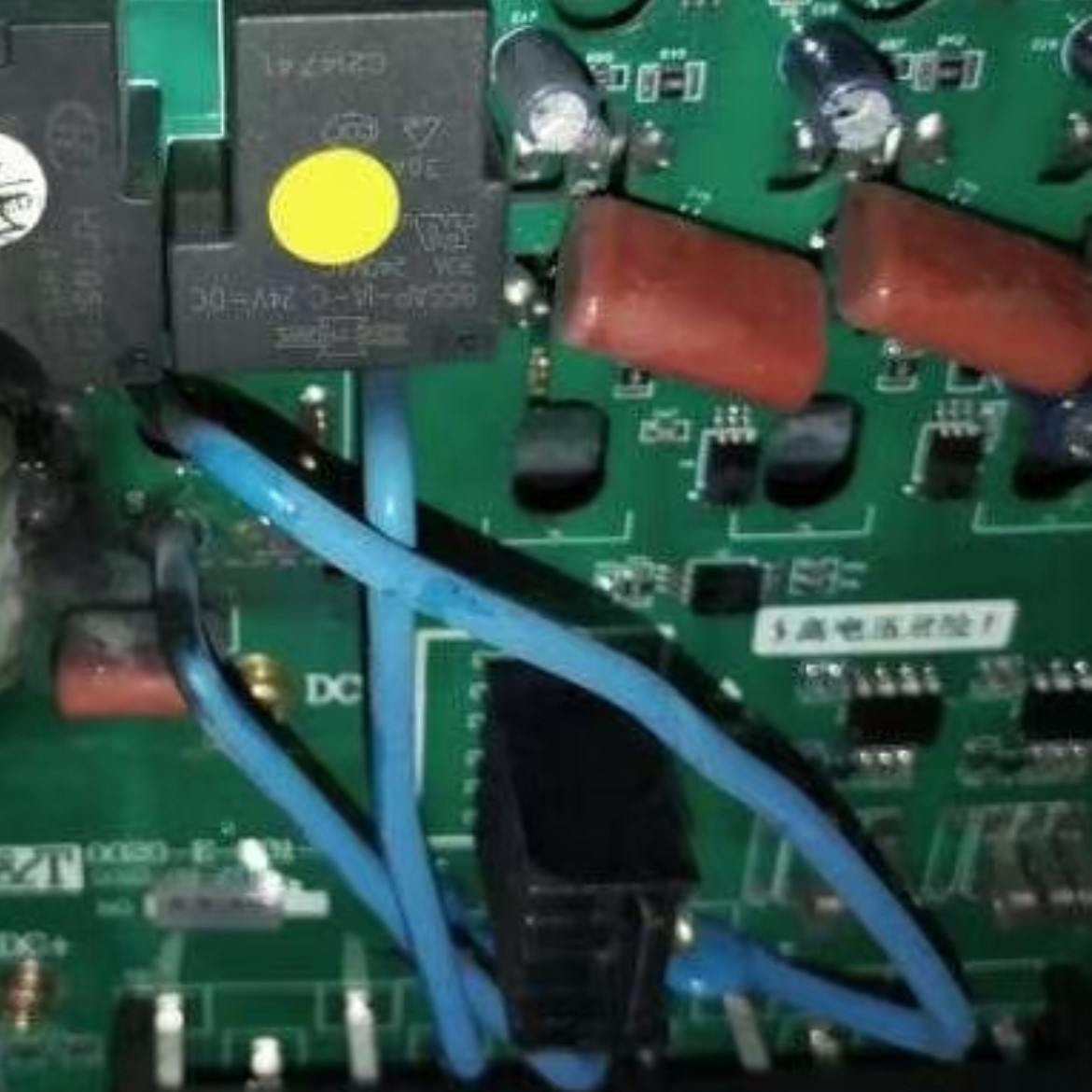
- Open the frequency converter case and check
whether internal components such as the inverter module, drive circuit,
and current detection circuit are damaged or aged. If there are damage or
aging phenomena, relevant components need to be replaced in time26.
By following these methods, the OC fault of the
frequency converter can be effectively resolved, ensuring its stable operation.
What is the OV fault in a frequency converter?
The OV fault in a frequencyconverter refers to an over-voltage fault.
OV stands
for Over Voltage, indicating that the input voltage of the frequency converter
exceeds its rated value. This fault is usually related to excessively high
supply voltage or internal faults of the frequency converter. Specifically,
excessively high supply voltage may be caused by abnormal grid voltage or
transformer failure; while internal faults of the frequency converter may involve
the failure of over-voltage protection circuits or rectifier bridges and other
components. In addition, the specific causes of OV faults may vary among
different brands of frequency converters. For example, an OV fault in an jienlu frequency converter may be caused by
expired battery life, triggered overload protection, damaged power
transformers, circuit board failures, or other factors such as overall machine
aging. On the other hand, an OV fault code in a Delta frequency converter may
be caused by excessively high supply voltage, improper internal parameter
settings of the frequency converter, sudden load changes, motor failures, and
other reasons. When dealing with an OV fault in a frequency converter, it is
first necessary to check whether the supply voltage is stable and meets the
input requirements of the frequency converter. Then, check whether the internal
parameter settings of the frequency converter are correct, and also pay
attention to the load condition and whether the motor has failed. Through
careful troubleshooting and repairs, the frequency converter can be restored to
normal operation.
What are the solutions to the OV fault in a frequency converter?
The solutions to the OV fault in a frequency converter
mainly include checking the supply voltage, adjusting the deceleration time,
monitoring load changes, checking for internal equipment faults, and repairing
or replacing faulty components.
- Checking the Supply
Voltage:
- Use a multimeter to measure the input supply
voltage and ensure it is within the specified voltage range of the
frequency converter.
- If the supply voltage is too high, consider
installing a voltage stabilizer to stabilize the voltage or consult with
the power supply department to resolve voltage fluctuation issues12.
- Adjusting the
Deceleration Time:
- During the deceleration process of the
frequency converter, if the deceleration time is set too short, it may
lead to an overvoltage fault. Therefore, based on the inertia of the load
and actual operating conditions, appropriately extend the deceleration
time13.
- Monitoring Load
Changes:
- Sudden load changes can cause abrupt changes in
motor speed, resulting in overvoltage. Therefore, for situations where
load changes may occur, additional monitoring devices for load changes
can be added or corresponding control measures can be taken1.
- Checking for Internal
Equipment Faults:
- Check whether the voltage detection circuit of
the frequency converter has failed, such as damage to the voltage sensor
or changes in the detection resistance value.
- Inspect the power supply section of the
frequency converter for damaged components, such as capacitors and
resistors15.
- Repairing or
Replacing Faulty Components:
- If faults are found in the voltage detection
circuit or other components, repairs or replacements should be carried
out.
- If none of the above methods resolve the issue,
consider replacing the frequency converter itself15.
During the repair process, safety precautions must be taken. Turn off the power, wear professional protective equipment, and avoid dangers such as electric shock. Additionally, avoid arbitrarily dismantling internal components of the frequency converter to prevent causing greater damage.
Products related to my wastewater treatment system