
What is a frequency converter?
What is a frequency converter?
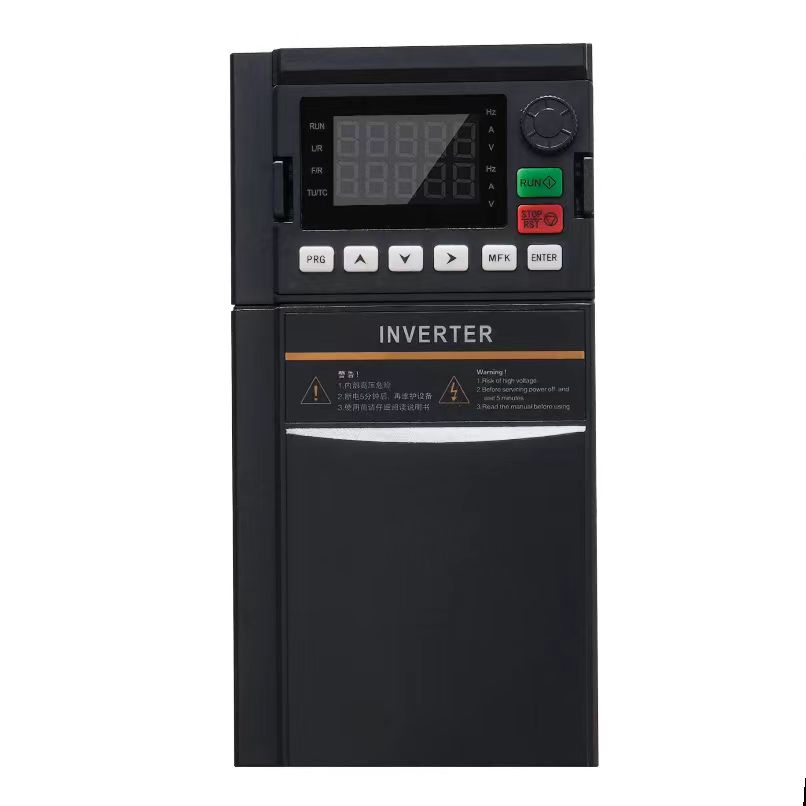
A frequency converter is a device used to control the speed of an electric motor by varying the frequency of the input power. It includes components such as a rectifier, filter, inverter, and control unit. Its primary function is to adjust the motor’s operating frequency, thereby regulating its speed and output power, which leads to energy savings and improved motor performance.
What is the working principle of a frequency converter?
The working principle of a frequency converter involves several key steps:
1. Rectification (AC to DC Conversion): The frequency converter first converts incoming alternating current (AC) into direct current (DC) using a rectifier.
2. Filtering: The rectified DC, which may be unstable and contain ripples, is smoothed out using filters (such as capacitors or inductors) to provide a stable DC power supply.
3. nversion (DC to AC Conversion): The stable DC is then converted back into AC by the inverter, which uses high-speed switching elements (such as IGBTs or MOSFETs) to generate AC with the desired frequency.
4. Frequency and Voltage Regulation: The converter adjusts the output frequency and voltage using Pulse Width Modulation (PWM) technology to control the motor’s speed and torque.
5. Feedback Control (Optional): Some advanced frequency converters include a feedback control system that monitors the motor’s performance and automatically adjusts the output frequency and voltage to maintain stable operation.
6. Output: The frequency converter finally outputs adjustable frequency and voltage AC power to the motor, allowing precise control of its speed.
In summary, a frequency converter transforms fixed-frequency AC power into variable-frequency AC power through rectification, filtering, inversion, and regulation, enabling precise motor control and enhancing system efficiency.