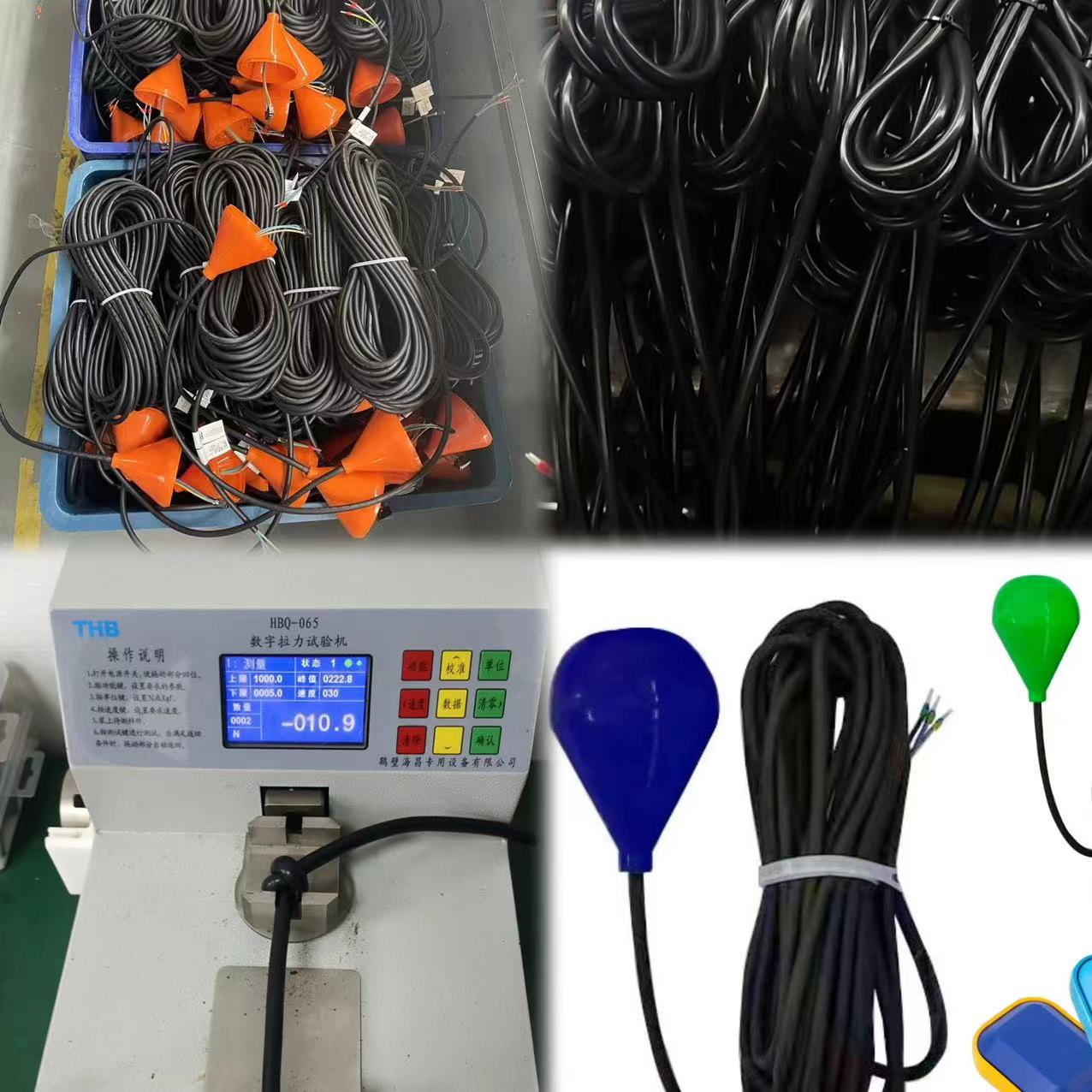
Causes of Liquid Level Float Switch Failure
The reasons for the failure of the built-in micro switch in the cable-type liquid level float switch include the following:
1. Reduced buoyancy due to high-density fluid media: The buoyancy of the float switch depends on the volume of its casing and the weight of the internal iron sand. If the design only considers clear water and ignores high-density media such as sewage, it may result in insufficient buoyancy, causing the float switch to malfunction.
Improvement Measures: Consider the density of various fluid media during the design phase to ensure that the float buoyancy is suitable for different media environments. Additionally, use high-quality Omron micro switches to ensure electrical performance and longevity.
2. Short circuit due to soldering in the built-in micro switch: When the float switch is submerged in water for a long time, the solder joints may develop tin whiskers, leading to a short circuit.
Improvement Measures: Use Omron switches with protective covers and seal them with environmentally friendly epoxy resin to prevent water ingress, ensuring electrical performance and safety.
3. Reversed soldering direction of the built-in micro switch: If there is no foolproof design during installation, workers may accidentally install the micro switch in the wrong direction, leading to switch failure.
Improvement Measures: Incorporate a foolproof design to prevent incorrect installation of the micro switch, ensuring consistent and correct installation.