
What are the similarities and differences between current output pressure sensors and resistance output pressure sensors?
Current pressure sensors and resistive pressure sensors are two different types of pressure sensors, each with distinct working principles and applications:
1. Current Pressure Sensors:
- Working Principle: They convert pressure signals into current signals (typically 4-20 mA) for transmission. The pressure changes cause changes in the current.
- Advantages: Current signals are less affected by line impedance and noise, making them suitable for long-distance transmission. They are ideal for industrial environments, especially over long distances and in situations with electromagnetic interference.
- Applications: Commonly used in industrial automation and process control.
2. Resistive Pressure Sensors:
- Working Principle: They rely on a strain gauge that deforms under pressure, causing a change in resistance. This resistance change is converted into a voltage signal using a bridge circuit, such as a Wheatstone bridge.
- Advantages: They have a simple structure, lower cost, and are easy to achieve high precision measurements.
- Applications: Widely used in laboratories, research and development, and situations requiring high precision and low cost.
In summary, the choice of sensor depends on specific application needs, including transmission distance, noise immunity, precision requirements, and cost considerations.
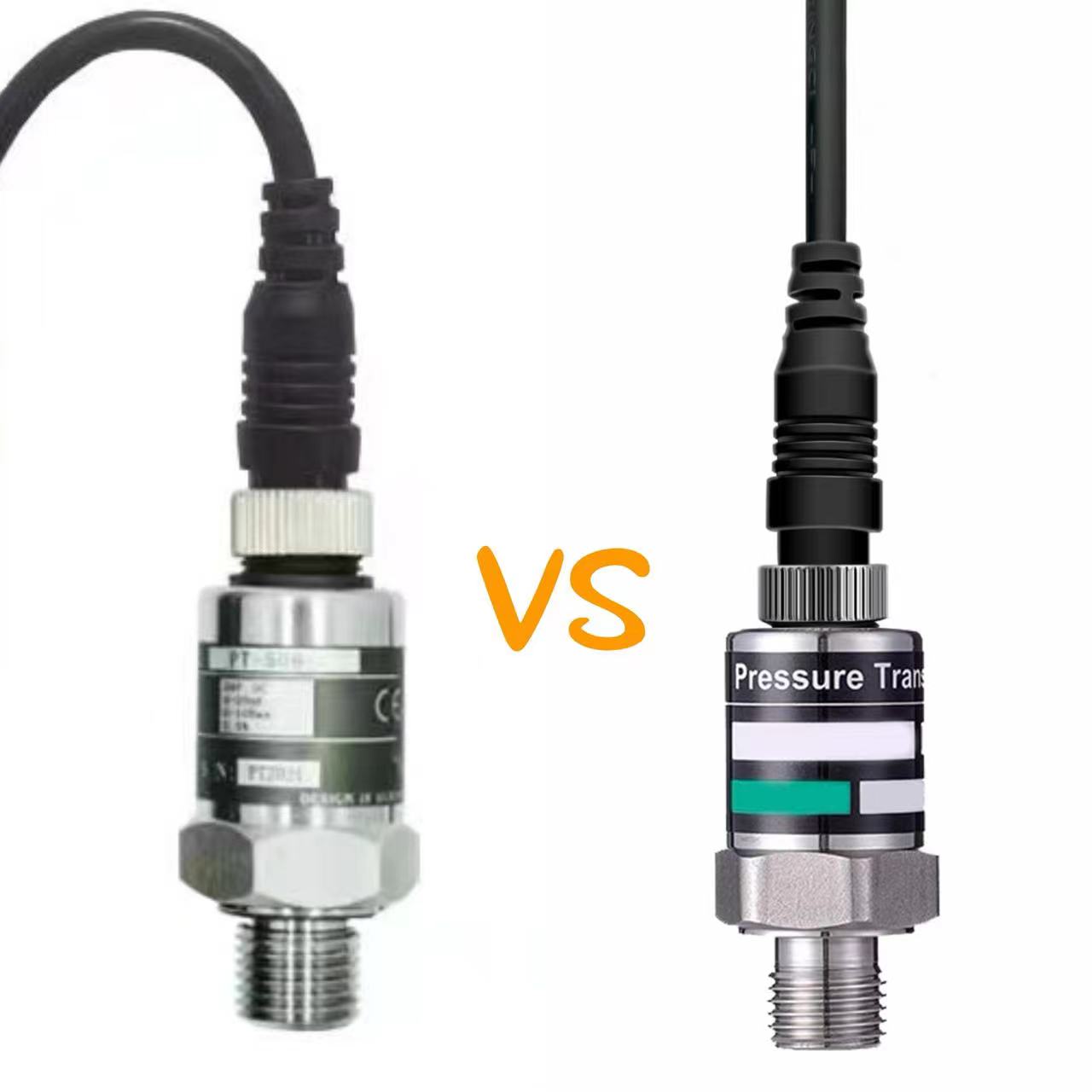
Similarities:
1. Function: Both types are used for measuring pressure and converting the pressure value into an electrical signal.
2. Applications: Both can be used in industrial automation, process control, laboratory testing, and other fields.
Differences:
1. Output Signal:
- Current Output Type: Outputs a current signal (e.g., 4-20mA), suitable for long-distance transmission and has strong anti-interference capability.
- Resistance Output Type: Outputs a resistance value, sensitive to signal interference and suitable for short-distance transmission.
2. Anti-Interference Capability:
- Current Output Type: The current signal is less affected by transmission distance, providing stronger resistance to electromagnetic interference.
- Resistance Output Type: The signal may be affected by line impedance and interference over long distances.
3. Application Environment:
- Current Output Type: Suitable for industrial environments and systems requiring remote monitoring.
- Resistance Output Type: Suitable for high-precision, short-range applications and laboratory environments.
4. Cost and Complexity:
- Current Output Type: Typically more complex and costly but offers better stability and reliability.
- Resistance Output Type: Simple in structure and lower in cost, but requires careful attention to signal transmission and processing.