
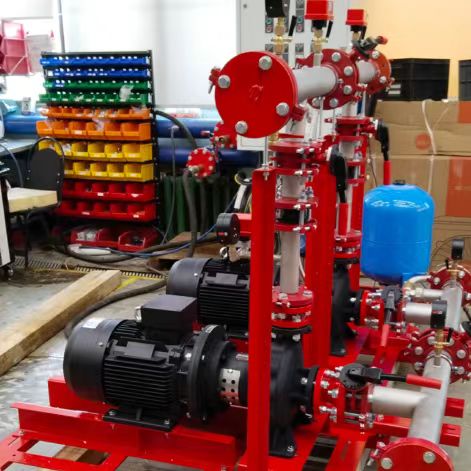
Customized Centrifugal Pump Units
Advantages of Centrifugal Pump Units:
- High Efficiency: Centrifugal pumps convert kinetic energy from the rotating impeller into pressure energy in the fluid, making them highly effective for handling large flow rates and high lift situations.
- Stability: The design promotes uniform fluid flow and reduces pulsation, allowing the pump to maintain stable performance under varying operating conditions.
- Low Noise: Centrifugal pumps generally operate with lower noise levels, especially when designed and constructed with noise-reducing materials and optimized features, minimizing environmental disturbance.
- Ease of Maintenance: The simple structure of centrifugal pumps makes routine maintenance and troubleshooting relatively easy, reducing maintenance costs.
- Versatility: Depending on the materials and design, centrifugal pumps can handle a wide range of fluids, from clean water to various chemical liquids, demonstrating broad applicability.
Main Uses:
- Water Supply Systems: In municipal water supply systems, centrifugal pumps are responsible for transporting water from sources to users, ensuring a stable supply.
- Fire Protection Systems: To ensure a reliable water source for firefighting, centrifugal pumps are used in fire pump stations, particularly for high-rise buildings and large industrial areas.
- HVAC Systems: In heating, ventilation, and air conditioning systems, centrifugal pumps circulate cooling water or other cooling fluids, maintaining system performance.
- Chemical Industry: In chemical production, centrifugal pumps are used to transport and circulate various chemical liquids, helping to maintain smooth production processes.
- Oil and Gas: In the oil and gas industry, centrifugal pumps are employed to transport crude oil, natural gas, and their by-products, ensuring a continuous energy supply.
Centrifugal pump units, with their efficiency, stability, and wide range of applications, are indispensable in various industries.
Here is the translation of the maintenance and operational considerations for centrifugal pump units into English:
Important Considerations for Using Centrifugal Pump Units to Ensure Proper Operation and Extend Service Life:
Installation and Startup:
1. Correct Installation: Ensure the pump unit is installed according to the manufacturer's guidelines. Check that all connections are secure and that the pump unit is installed on a stable, level surface.
2. Check Piping: Before starting, inspect the inlet and outlet piping for blockages or leaks to avoid damage to the pump unit.
3. **Priming the Pump:** Ensure the pump is filled with liquid before starting to avoid dry running, which can damage the pump components.
4. **Electrical Inspection:** Confirm that the electrical system and control equipment are correctly installed to prevent equipment failure due to electrical issues.
Operation:
1. Monitor Operating Conditions:Regularly check the pump unit’s pressure, flow, temperature, and vibration parameters to ensure it operates within normal ranges.
2. Avoid Cavitation: Ensure the suction piping is clear to prevent cavitation, which can lead to decreased performance and damage.
3. Avoid Overloading:Do not operate the pump unit continuously under overload or excessively high pressure conditions to prevent shortening its lifespan.
4. Flow Regulation:*Adjust flow rate using the flow control valve to prevent excessive pressure fluctuations on the pump unit.
Maintenance and Care:
1. Regular Inspection: Periodically inspect mechanical components of the pump unit, such as bearings, seals, and impellers, for wear or damage.
2. Lubrication: Follow the manufacturer’s recommendations for regular lubrication of moving parts to reduce wear and extend service life.
3. Cleaning:Regularly clean the interior and exterior of the pump unit, especially the inlet and outlet areas, to prevent buildup that can affect performance.
4. Spare Parts: Keep commonly used spare parts on hand to facilitate quick repairs in case of pump unit failures.
Safety Considerations:
1. Follow Operating Procedures:Adhere to all operating procedures and safety standards to ensure the safety of operators.
2. Protective Measures: Install necessary protective devices, such as overload protectors and temperature sensors, to prevent equipment damage.
3. Training:Ensure operators are properly trained to understand how to operate and maintain the pump unit correctly.
By paying attention to these considerations, you can maximize the operational efficiency and reliability of the centrifugal pump unit while minimizing failures and maintenance costs.